Not registered yet? Please contact our project manager Sonja Leissner . This area is only for members of the research consortium.

News

9 December 2025

The Role of LSECtin in Regulating Inflammation in ACLD | Keynote

We are pleased to announce the release of a keynote lecture by Prof. Rubén Francés (Miguel Hernández University) as part of the DECISION project’s scientific training series.

In this keynote, Prof. Francés presents an in-depth overview of LSECtin, a regulatory molecule expressed by liver sinusoidal endothelial cells (LSECs), and its essential role in maintaining immune tolerance within the hepatic microenvironment. He discusses how LSECtin expression becomes repressed during cirrhosis, and how its modulation affects inflammatory pathways, endothelial–lymphocyte interactions, and Th17 activity.

The lecture integrates findings from patient samples and preclinical models, offering new insights into mechanisms that drive inflammation and immune dysregulation in advanced chronic liver disease (ACLD).

👉 Watch the keynote here.

More news

News

27 November 2025

Maladaptive Emergency Granulopoiesis Predicts Poor Outcomes in Decompensated Cirrhosis

The DECISION consortium has published a major new study in the Journal of Hepatology, shedding light on immune mechanisms that predict outcomes in patients with acutely decompensated cirrhosis (ADC).

Analyzing whole-blood transcriptomic data from over 1,200 patients without acute-on-chronic liver failure (ACLF) at admission, the study identified maladaptive emergency granulopoiesis (EG) as a hallmark of patients at high risk of developing ACLF within 28 days.

Key findings include:

  • ▪️Patients with poor outcomes exhibit transcriptomic features of maladaptive EG, including neutrophil activation and immunosuppressive signatures
  • ▪️Specific gene markers may help identify individuals at high risk for ACLF and short-term mortality
  • ▪️Targeting maladaptive EG may present a promising avenue for future therapies to prevent disease progression

This research provides important insights into the pathophysiology of decompensated cirrhosis and highlights potential biomarkers and therapeutic targets to improve patient outcomes.

Read the full paper in the Journal of Hepatology.

More news

Events

13 October 2025

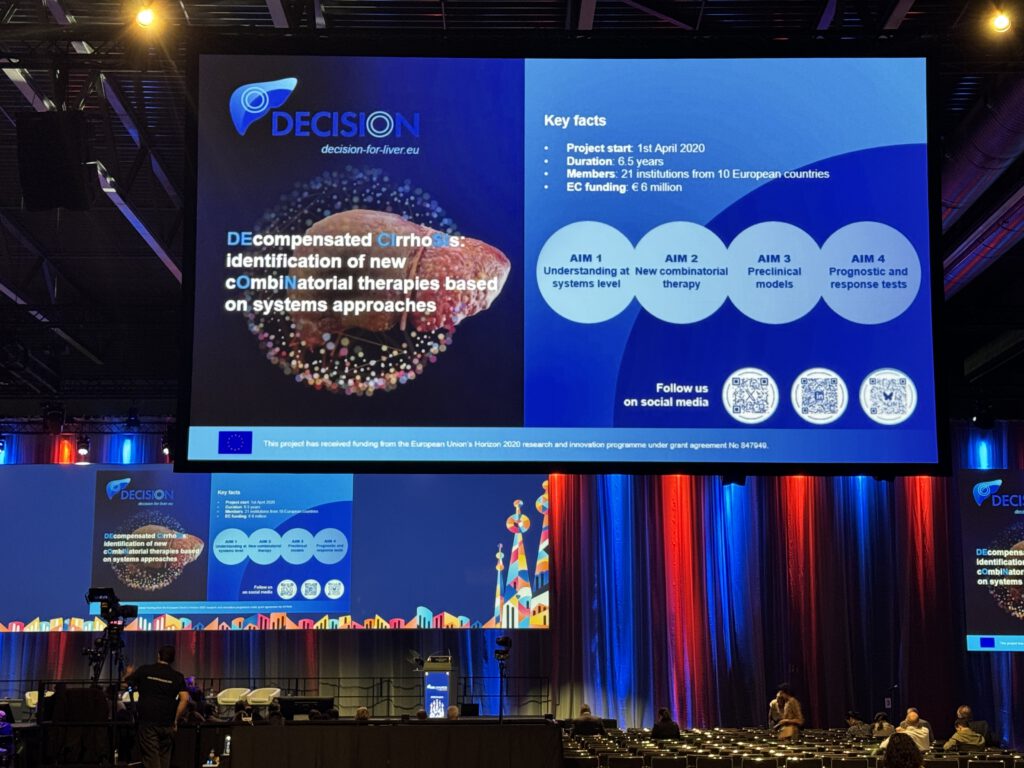
DECISION’s final General Assembly Meeting in Madrid

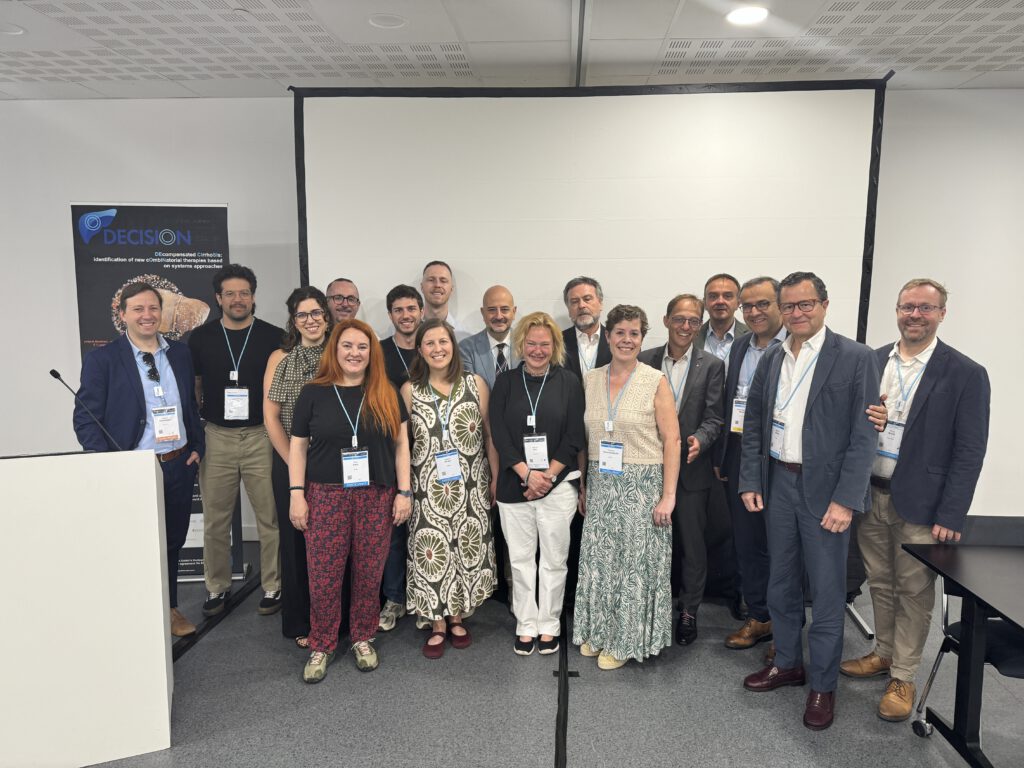
The DECISION consortium headed to Madrid for our final General Assembly Meeting. Although the project continues for a few more months, coming together in person felt like closing an important chapter and reflecting on five years of collaborative work.

The first day focused on the past, present, and future of DECISION’s science. We revisited key aspects from our multi-omic analyses, explored upcoming publications, and looked ahead to future data integration and systems-level insights. The day concluded with a practical masterclass on data repositories and publication rights.

On the second day, we aligned on progress in our COMBAT and PROSPECT clinical studies and discussed upcoming analysis plans. A consortium-wide conversation on what may follow after DECISION highlighted ongoing enthusiasm and opportunities for continued collaboration.

We leave Madrid proud of our collective achievements and committed to delivering our final results in the months ahead.

More events

Our Vision

DECISION strives to better understand the pathophysiology of decompensated cirrhosis leading to acute-on-chronic liver failure (ACLF) at the systems level by taking advantage of already existing large and clinically well characterized patient cohorts. The ultimate goal is to significantly reduce mortality through combinatorial therapies that are tailored to the specific needs of individual patients. Part of this endeavour is to develop a reliable prognostic test and a robust response test.

Learn more

Why it matters

In 2013, cirrhosis was responsible for 1.2 million deaths worldwide. While most cirrhosis patients initially do not show symptoms, acute decompensation of cirrhosis, defined as the body’s inability to cope with the progressing dysfunctionality of the liver, leads to drastic symptoms. Decompensation is characterized by the development of ascites, hepatic encephalopathy, jaundice, or gastrointestinal haemorrhage, and is often a turning point for cirrhosis.

Learn more